The Spring That Almost Cost a Homeowner His Door
A few years ago, I got a call from a homeowner in Green Bay who said, “I tried replacing the spring myself — it looked easy on YouTube.”
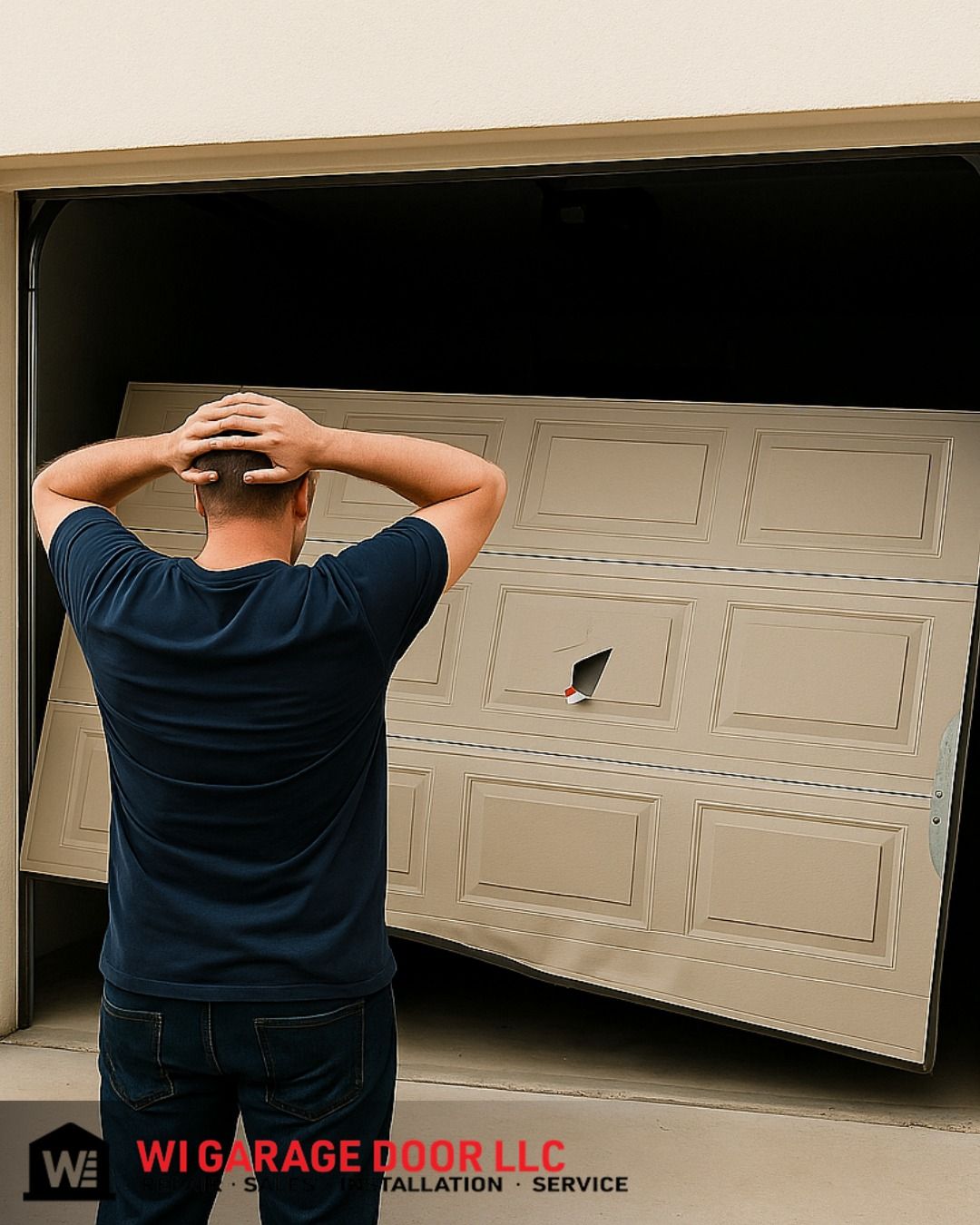
When I arrived, I found one spring half-installed and the other dangerously loose, wound unevenly on the torsion bar.
The bar itself was bowed, and the opener was struggling to lift the door even a few inches.
He’d meant well — but his mistake was common: thinking garage door spring replacement is just a mechanical swap.
In truth, it’s one of the most precise and potentially dangerous tasks in residential repair work.
I told him something I often say:
“When it comes to garage door springs, safety isn’t just a priority — it’s the job.”
Here’s what every homeowner should know about safe and effective garage door spring replacement, the professional repair techniques we use, and why experience makes all the difference.
1. Understanding What’s at Stake
Garage door springs aren’t just big coils of metal — they’re energy storage systems.
When wound correctly, they hold hundreds of pounds of force.
That’s what lets you lift a 200-pound door with one hand.
But when handled incorrectly, that stored energy can release instantly — snapping tools, breaking parts, or causing injury.
That’s why professional garage door spring replacement begins with one rule: respect the tension.
Every adjustment is calculated, measured, and tested before moving to the next step.
2. The Professional Sequence: How It’s Done Safely
When I train new technicians at WI Garage Door LLC, I drill into them that there’s no rushing a spring job.
We follow a methodical, time-tested process designed for safety and precision.
Step 1: Disable Power and Secure the Door
Before touching anything, we disconnect the opener and clamp the door securely in the open position.
This prevents it from falling unexpectedly once the springs are released.
Step 2: Release the Tension Gradually
Using winding bars — never screwdrivers — we unwind each spring one-quarter turn at a time.
This ensures full control over the stored energy.
Step 3: Inspect Every Related Component
During a garage door spring replacement, we also check cables, bearings, drums, and the torsion shaft.
There’s no point replacing a spring if worn hardware will just undo the repair.
Step 4: Install and Calibrate the New Springs
Once the correct springs are mounted, we wind them to manufacturer specifications, balancing torque and door weight to perfection.
Even one-quarter turn too tight or loose can make the door unsafe.
Step 5: Test for Smooth, Balanced Operation
We reconnect the opener, cycle the door multiple times, and fine-tune spring tension until it opens effortlessly — not fast, not slow, but in harmony.
That balance is the mark of a true professional.
3. The Science of Balance: Why It Matters So Much
In every garage door spring replacement, the goal isn’t just “working.”
It’s balanced motion.
When both springs share equal tension, the door glides evenly, and the opener carries almost no strain.
If one spring takes more load, it twists the torsion bar and fatigues the system.
Think of it like a seesaw: both sides must carry the same weight, or everything becomes unstable.
That’s why, at WI Garage Door LLC, we always replace both springs — even if only one is broken.
It ensures long-term reliability, safety, and smoother operation.
4. Tools That Make the Difference
Here’s a truth most DIY videos never mention: using the right tools is 50% of doing the job safely.
When we handle garage door spring replacement in Green Bay homes, our toolkit includes:
- Precision-calibrated winding bars (never screwdrivers)
- Torque gauges to measure exact spring tension
- Laser levels for track and shaft alignment
- High-strength clamps to secure the door during work
- Lubrication and corrosion protection tools for post-install finishing
Every one of those tools serves a purpose — control.
Control of tension, control of alignment, control of safety.
5. The Counterintuitive Secret: Tight Springs Fail Faster
It sounds strange, but I’ve seen it again and again:
Over-tightened springs wear out sooner.
Many inexperienced techs — or DIYers — assume tighter equals stronger.
In reality, it creates excess friction in the coils, puts unnecessary torque on the bearings, and wears down metal faster.
Proper garage door spring replacement requires tension that’s precise, not just “strong.”
That’s why we measure every system’s balance before and after winding.
A perfectly tuned door feels weightless halfway up — that’s when you know it’s right.
6. Common Mistakes That Turn Repairs Into Hazards
After years of performing garage door spring replacements across Green Bay, I’ve seen just about every DIY mistake possible — and they all have one thing in common: underestimating the power of spring tension.
Here are the most dangerous errors I encounter:
A. Using the Wrong Type or Size of Spring
Each door requires a specific wire gauge, coil length, and diameter.
Even a half-inch mismatch changes how weight is distributed — throwing the entire system off balance.
The wrong spring may “work” for a few weeks, but it’ll quickly overstrain the opener or cables.
B. Replacing Only One Spring
I can’t stress this enough — always replace both springs together.
When one breaks, the other has already endured the same cycle count and is close to failure.
A mismatched pair is a recipe for uneven lift and torsion bar twisting.
C. Skipping Safety Cables on Extension Systems
Extension springs under tension can become lethal projectiles if they snap.
Safety cables keep them contained — an absolute must during any garage door spring replacement involving older systems.
D. Using Improvised Tools
I once saw a homeowner using a screwdriver instead of winding bars. The screwdriver slipped, dented the car hood, and could easily have caused serious injury.
Professional-grade winding bars lock securely into the cone and give full control of torque — a detail no YouTube tutorial explains well enough.
7. Timing Matters: Why Weather Affects Spring Performance in Green Bay
If there’s one thing Wisconsin weather teaches you, it’s that metal has a memory.
When temperatures drop below freezing, steel contracts. Springs become stiffer and more brittle, meaning small cracks can turn into full breaks overnight.
That’s why winter and early spring are peak seasons for garage door spring replacement calls.
On the other hand, summer humidity encourages rust, corrosion, and loss of coil lubrication — another reason why spring inspections are essential year-round.
Pro Tip:
If your door starts feeling heavier or slower during seasonal shifts, it’s not “just the cold.” It’s your springs reacting to temperature change — a warning worth listening to.
8. After the Replacement: Keeping Springs Healthy for the Long Run
A professional garage door spring replacement resets your door’s balance and safety — but a few simple habits can help keep it that way.
A. Lubricate Properly
Use silicone-based lubricant twice a year on the springs and bearings.
Never use grease or oil that can collect dust and harden in the cold.
B. Schedule Regular Maintenance
Even a well-installed system can drift out of balance over time.
A quick annual tune-up from WI Garage Door LLC ensures your springs, cables, and opener all work in sync.
C. Listen for Changes
The smallest difference in sound — a pop, rattle, or groan — can mean tension loss or alignment shift.
Addressing it early prevents costly future repairs.
D. Keep Components Dry
If snowmelt or rain collects near your garage door threshold, it can creep up and corrode metal parts.
Wipe the area regularly and make sure drains are clear.
9. The Counterintuitive Truth: Springs Don’t “Break” — They Fatigue
Here’s something most homeowners never hear:
Springs rarely fail suddenly. They fatigue over time.
Every time your door opens and closes, the steel flexes slightly.
After 10,000+ cycles, microscopic cracks begin to form in the coil surface.
Those cracks eventually expand until the metal can’t flex anymore — and that’s when it “snaps.”
Regular inspections and lubrication slow that process dramatically.
That’s why a proactive garage door spring replacement schedule isn’t about repair — it’s about prevention.
When you stay ahead of fatigue, you stay ahead of failure.
10. Why Professional Spring Replacement Is Always Worth It
There’s a reason I tell customers not to gamble with DIY spring work.
A professional garage door spring replacement isn’t just about tools — it’s about understanding balance, physics, and safety.
At WI Garage Door LLC, we:
- Match spring type to your door’s exact weight and dimensions.
- Use calibrated winding bars and digital torque meters.
- Replace bearings and cables when needed to extend lifespan.
- Apply corrosion-resistant coating for Green Bay’s humid climate.
- Test safety reversal and opener strain before final sign-off.
It’s not just a replacement — it’s a restoration of safety and performance.
11. The Mentor’s Perspective: Balance Is the Quiet You Can Hear
There’s a moment I always look forward to at the end of a garage door spring replacement — when the door glides silently for the first time after calibration.
That silence isn’t empty. It’s the sound of perfect balance — tension, weight, and motion working in harmony.
It’s proof that your door is safe, your opener is protected, and your home is secure.
I tell every customer the same thing:
“A well-tuned door isn’t just about movement — it’s about peace of mind.”
That’s what real service feels like.
Final Thoughts: Green Bay’s Trusted Experts for Garage Door Spring Replacement
If your door has started to feel heavy, noisy, or unpredictable, don’t wait until it fails.
A professional garage door spring replacement from WI Garage Door LLC can restore your system’s performance, extend its lifespan, and protect your investment.
Our team serves Green Bay homeowners with precision, care, and craftsmanship — ensuring every door we touch operates like new.
Because when your garage door is balanced, your life is, too.
Call WI Garage Door LLC — Green Bay’s trusted experts for garage door spring replacement, balance tuning, and complete system safety checks.
Safe. Smooth. Reliable. Every time.