The Morning a “Broken Opener” Turned Out to Be Perfectly Fine
One cold morning in Green Bay, I got a call from a homeowner who said, “My garage door opener just died.”
When I arrived, I found the opener humming quietly but not moving the door.
He was ready to buy a new unit on the spot. But when I disconnected the opener and tested the door by hand, it was so heavy I could barely lift it. The problem wasn’t the opener at all — it was the spring.
That visit reminded me how often garage door repair begins with misdiagnosis.
The opener usually gets blamed because it’s what people see moving.
But most of the time, it’s responding to something deeper in the system — spring tension, sensor feedback, or travel calibration.
So today, let’s talk about what’s really going on when your garage door opener stops working — and how a proper garage door repair solves the cause, not just the symptom.
1. The Opener Is the Brain, Not the Muscle
Think of your opener as the control system — the brain of the garage door.
The real lifting power comes from the springs.
When springs weaken, the opener must do extra work.
That strain wears down gears, belts, and internal motors far faster than normal.
If your opener slows down or struggles, that’s your system saying:
“I’m out of balance — not out of power.”
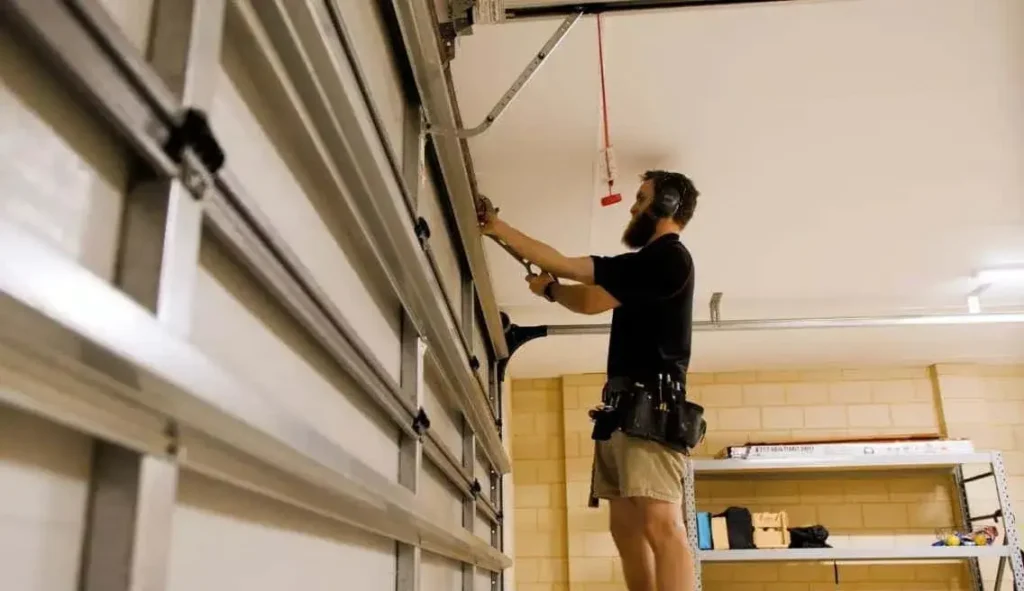
During a professional garage door repair, we always test spring tension first.
It’s like checking the car’s suspension before blaming the engine.
2. Common Opener Problems — and What They Actually Mean
A. The Opener Hums but Doesn’t Move the Door
This is usually a broken spring, not a dead motor. The opener is working — it’s just trying to lift more than it was designed to.
B. The Door Opens Partway, Then Stops or Reverses
That’s your force or travel limits kicking in — safety features preventing damage when the door feels resistance.
This is often fixed by recalibrating limits after spring or cable wear.
C. The Door Closes, Then Immediately Reopens
This is almost always a sensor issue — dust, misalignment, or sunlight interference. Clean the lenses and check that the LED lights on both sensors are solid.
D. The Opener Makes a Grinding Noise
A worn drive gear or sprocket is likely. The good news? Those parts are replaceable without replacing the entire unit. A targeted garage door repair here can save hundreds of dollars.
E. The Remote or Wall Button Doesn’t Work
Before assuming electrical failure, check the simplest things first — dead batteries, tripped circuit, or a blown fuse on the opener’s logic board.
The key to effective garage door repair isn’t replacing — it’s isolating.
3. The Counterintuitive Truth: Most “New Opener” Installs Are Unnecessary
Here’s something most companies won’t tell you:
About 70% of openers replaced during service calls aren’t truly broken.
They’re just reacting to another problem:
- Overstressed springs
- Loose chain tension
- Rusted rollers or unlubricated bearings
- Travel limit drift from repeated cycles
When one part of the system goes out of tune, the opener compensates — until it can’t.
That’s why at WI Garage Door LLC, our garage door repair process always begins with a full system inspection before we touch the opener. Because if you replace the brain while ignoring the body, the symptoms will come back.
4. The Role of Balance: Why Openers Fail in Pairs
Every opener is designed to lift a balanced load. When your springs weaken, even slightly, that load increases exponentially.
That’s why I always demonstrate balance to homeowners after a garage door repair: I disconnect the opener and lift the door halfway. If it stays in place, your system is healthy. If it drifts or drops, it’s out of calibration — no opener can survive that strain for long.
Balance isn’t optional; it’s what determines whether your opener lasts 5 years or 15.
5. The Belt, Chain, and Screw Drive Breakdown
Every opener type has a personality — and knowing how to read it helps prevent future failure.
Belt Drive:
Quiet, smooth, perfect for attached garages. However, belts stretch over time and need periodic tension adjustments.
Chain Drive:
Durable and affordable but noisier. Lubricate regularly to prevent metal-on-metal wear.
Screw Drive:
Strong but sensitive to temperature changes. In Green Bay winters, grease thickens, causing slow or stuck operation.
Each requires a slightly different garage door repair approach — one that matches the opener’s mechanics to Wisconsin’s seasons.
Whenever I’m called for an opener issue, my process is always the same — deliberate, step-by-step, and precise.
That’s how we ensure every garage door repair gets to the root cause, not the surface symptom.
Here’s what that looks like in practice:
- Visual Inspection:
I start by checking the obvious — springs, cables, tracks, and hinges. One failed spring or loose bracket can fool the opener’s sensors. - Manual Balance Test:
I disconnect the opener and lift the door halfway. If it drifts, it’s unbalanced — and that tells me right away that the problem isn’t electrical. - Force and Travel Calibration:
I reset the opener’s sensitivity and travel limits. This ensures it knows exactly where the floor and ceiling are — crucial for proper operation. - Safety Sensor Verification:
I check the alignment and wiring on both sensors. Even a few degrees off can stop a door from closing. - Electrical Diagnostics:
Only after all mechanical systems are verified do I test the logic board, capacitor, or motor.
That sequence — mechanical first, electronic second — is why most of our garage door repairs succeed where quick “swap-the-opener” fixes fail.
7. The Counterintuitive Tip: Don’t Reset Your Opener Until You Know the Cause
Here’s something most homeowners don’t realize:
Resetting your opener before diagnosis can erase critical data that helps pinpoint the issue.
Modern openers store travel, force, and error codes.
If you reset it too soon, you wipe out that history — and the clues that tell us what’s wrong.
I once visited a Green Bay homeowner who had reset his Wi-Fi opener three times. The problem? His travel limits had drifted due to spring fatigue.
Once I rebalanced the springs and recalibrated the limits, the opener worked perfectly.
That’s why I always tell customers:
If something goes wrong, don’t panic and start resetting.
Just unplug it, leave it as-is, and call for a garage door repair.
Those saved diagnostics can cut your service time — and your cost — in half.
8. Preventing Opener Problems Before They Start
An opener’s lifespan is all about environment and maintenance.
Here in Green Bay, humidity, cold, and power fluctuations are the biggest threats.
Here’s how to protect yours:
- Lubricate twice a year. Keep the chain or belt moving smoothly.
- Protect from cold. If your garage isn’t insulated, consider a small heater during deep freezes.
- Surge protection. A single lightning strike or power spike can fry the circuit board.
- Check travel limits after every spring replacement. New springs change tension, and that affects your opener’s range.
A little care between professional garage door repairs goes a long way.
9. Why Opener Type Should Match Your Lifestyle
Choosing the right opener isn’t just about horsepower — it’s about usage patterns.
If you use your door multiple times a day, invest in a belt-drive Wi-Fi opener.
It’s quiet, durable, and ideal for attached garages in Green Bay’s residential neighborhoods.
For detached or commercial-style spaces, chain drives provide unmatched strength.
If speed and reliability matter most, DC motor openers with soft start/stop technology protect both the door and the system.
A proper garage door repair or replacement consultation includes assessing your habits — not just the hardware.
10. The Green Bay Factor: Weather vs. Electronics
Cold air thickens lubricants, condensation creates short circuits, and salt corrosion eats wiring.
That’s why winter is the most common season for opener failure here in Green Bay.
Every January, I see the same pattern:
- Frozen rollers increasing strain
- Springs losing elasticity
- Motors overworking under heavy load
That’s why I recommend scheduling a garage door repair or tune-up every fall — before winter hits.
We’ll re-lubricate, retension, and recalibrate so your opener glides through the season effortlessly.
11. The Mentor’s Perspective: A Healthy Opener Feels Effortless
After 20+ years in this trade, I’ve learned to judge a garage door opener not by its noise — but by its feel.
When everything’s balanced and calibrated, the opener doesn’t sound powerful — it sounds graceful.
There’s no hesitation, no jerking, no grinding. Just smooth, controlled motion.
That’s what proper garage door repair is all about — restoring effortlessness.
Because the best systems aren’t the loudest or fastest — they’re the ones you forget are even there.
Final Thoughts: Green Bay’s Trusted Experts in Garage Door Repair and Opener Service
Your opener is the heartbeat of your garage — and like any vital system, it needs precision care to stay reliable.
At WI Garage Door LLC, we approach every garage door repair with one goal:
To restore safety, silence, and balance — not just movement.
From opener diagnostics and spring calibration to full-system maintenance, every service we perform is tuned for Wisconsin’s unique climate and built to last through every freeze and thaw.
Because when your door moves smoothly, your whole day does too.
Call WI Garage Door LLC — Green Bay’s trusted experts for garage door repair, opener calibration, and full-system maintenance.
Smart. Quiet. Reliable. Every time.