The Day I Found Two Different Springs on the Same Door
A few years ago, I got a call from a Green Bay homeowner who said, “My garage door opens crooked and makes a screeching sound.”
When I arrived, I immediately saw the problem — someone had installed two different types of springs on the same door.
One was an extension spring from a DIY kit, the other was an old torsion spring from a past garage door spring replacement.
They were completely mismatched in tension, size, and strength.
That door had been fighting itself for months.
Each time it opened, one spring pulled harder than the other until the torsion bar twisted and the door bent slightly out of shape.
That job stuck with me because it proved something I tell every homeowner:
Not all garage door springs are the same — and using the wrong type can destroy your door.
If you’re considering a garage door spring replacement, it’s crucial to understand the different spring types, how they work, and which is right for your system — especially in a climate like Green Bay’s.
Let’s break it down.
1. The Two Main Types of Garage Door Springs
Every residential garage door uses one of two spring systems: torsion springs or extension springs.
Both serve the same purpose — counterbalancing the door’s weight — but they do it in very different ways.
A. Torsion Springs: The Powerhouse Above Your Door
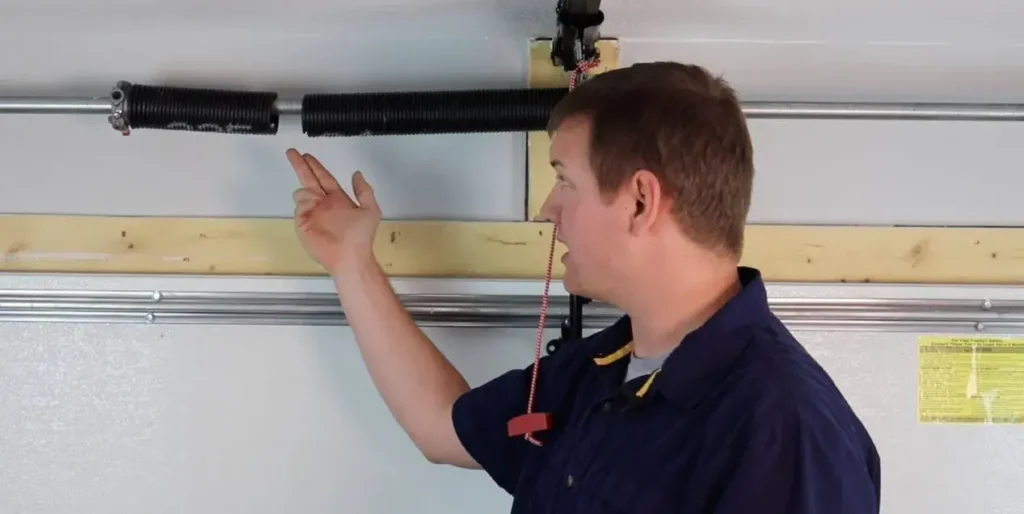
If you look above your garage door and see a long metal bar with coils wrapped around it, those are torsion springs.
They work by twisting and storing energy when the door closes, then releasing that energy to lift the door smoothly.
Why I Prefer Them:
Torsion systems are stronger, safer, and longer-lasting than extension springs.
They distribute weight evenly and make the door feel lighter to lift.
That’s why 9 out of 10 garage door spring replacements I perform in Green Bay involve converting old extension systems into modern torsion setups.
Advantages of Torsion Springs:
- Quieter, smoother operation
- Fewer moving parts (less maintenance)
- Better balance and safety
- Ideal for heavy or insulated doors
- More resistant to cold-weather fatigue
Torsion springs are the standard choice for most professional installations today — especially in climates like ours, where temperature extremes can quickly wear out lower-quality hardware.
B. Extension Springs: The Older, High-Tension Workhorses
Extension springs are the long, thin coils running parallel to the door tracks.
They stretch to store energy when the door closes, then contract to help lift it.
These were standard for decades, and you’ll still find them in many older homes across Green Bay.
Advantages of Extension Springs:
- Lower upfront cost
- Easier to install in tight spaces
- Common in older one-car garages
Disadvantages:
- Shorter lifespan (usually half that of torsion springs)
- Noisy and prone to jerking motion
- Require safety cables to prevent snapping accidents
I always tell homeowners:
“Extension springs are fine — until they’re not.”
They work well for light doors, but for modern steel or insulated panels, a torsion-based garage door spring replacement is almost always the smarter choice.
2. Specialty Spring Systems You Might Encounter
Beyond the two main categories, there are a few specialized systems designed for specific applications.
You might not see these often, but as a professional technician, I run into them from time to time in custom builds or commercial setups.
A. TorqueMaster Springs
These are enclosed systems made by Wayne Dalton.
The springs are hidden inside a metal tube above the door for a cleaner look.
They’re compact, quiet, and safe — but they also require proprietary tools for repair or replacement.
When a TorqueMaster system wears out, I usually recommend a full garage door spring replacement with a torsion conversion.
It simplifies future maintenance and allows for standard parts that are easier to find and service in Green Bay.
B. Clipped-End and Double-Loop Extension Springs
These are variations of extension springs.
Clipped-end springs handle heavier doors, while double-loop versions add durability and reduce stress on the hooks.
If your system still uses one of these, it’s essential to replace both springs at once during any garage door spring replacement.
Mismatched tension is one of the fastest ways to damage your opener or misalign the door.
C. Commercial-Grade Oil-Tempered Torsion Springs
For heavier doors — like in commercial garages or multi-car homes — I use oil-tempered torsion springs.
They’re heat-treated for resilience, holding up to extreme use and temperature fluctuations.
They’re ideal for Green Bay properties where the garage door cycles frequently — like large families or workshops.
A professional garage door spring replacement using oil-tempered torsion springs can easily last 25,000–50,000 cycles with proper care.
3. How to Tell Which Springs You Have
You can usually identify your spring system in seconds:
- Look above the door:
- Long horizontal bar with coils = torsion system
- Long coils along the sides of tracks = extension system
- Check for safety cables:
- Present = extension
- Absent = torsion
- Sound and feel:
- Smooth, quiet = torsion
- Jerky, louder motion = extension
If you’re unsure, take a photo and show it to your local technician before scheduling your garage door spring replacement.
Identifying your setup ahead of time ensures the right parts are prepared for your service appointment.
4. Which Garage Door Spring System Is Right for You?
Every home is different — door weight, usage frequency, and even temperature all influence which spring system will perform best.
Here’s how I help Green Bay homeowners decide during a garage door spring replacement consultation:
| Factor | Torsion Springs | Extension Springs |
| Durability | 15,000–30,000 cycles | 7,000–10,000 cycles |
| Noise Level | Very quiet | Noticeably louder |
| Safety | Contained tension, safer | High risk without cables |
| Cost (Over Time) | More upfront, lasts longer | Cheaper upfront, more replacements |
| Best For | Heavy or double doors, frequent use | Light single-car doors, low use |
In most Green Bay homes, torsion springs win every category that matters.
They handle our harsh winters better, resist fatigue, and keep doors running quietly for years.
That’s why nearly every modern garage door spring replacement we perform at WI Garage Door LLC involves upgrading to a torsion system.
5. The Counterintuitive Truth: Bigger Isn’t Always Better
Here’s something that surprises even some technicians:
A longer, thicker spring doesn’t always mean longer life.
Spring longevity depends on balance, not size.
If the spring is too strong for the door, it overcompensates — slamming the door upward or stressing the opener.
If it’s too weak, the opener bears too much load.
True expertise in garage door spring replacement means finding the exact wire size, diameter, and length to match your door’s weight and height.
That precision is what gives you smooth motion, safety, and quiet performance — not just bigger coils.
6. Why Climate Matters in Spring Selection
Green Bay’s winters are brutal on steel.
Metal contracts in freezing temperatures, and springs lose elasticity faster in the cold.
Humidity and salt in the air cause corrosion that shortens spring lifespan even more.
That’s why I always recommend oil-tempered or galvanized torsion springs for Wisconsin homeowners.
They resist rust, handle temperature swings, and maintain strength year-round.
During every garage door spring replacement, I also apply a protective silicone coat — a small detail that can add two to three years to a spring’s life.
It’s a little extra work, but it’s how we make our installations outlast the average.
7. How to Extend the Life of Your Springs After Replacement
A proper garage door spring replacement is just the start.
What you do afterward determines how long that smooth, balanced motion lasts.
Here’s my quick Green Bay maintenance checklist for homeowners:
A. Lubricate Twice a Year
Use a silicone-based spray on the coils — once before winter, once in spring.
Avoid heavy oils that attract dirt or freeze in the cold.
B. Schedule Annual Professional Tune-Ups
A spring can lose 5–10% of its tension every year.
A quick adjustment during regular garage door service keeps your door balanced and prevents premature failure.
C. Keep Moisture Away
Snowmelt from your car drips directly under the torsion bar — wipe that area dry after storms.
Rust often starts there.
D. Replace Both Springs Together
Even if only one breaks, always replace both during your garage door spring replacement.
They age and fatigue together — a mismatched pair never stays balanced for long.
8. The Real Cost of Ignoring Spring Issues
I once visited a Green Bay customer who’d been living with a “slow” garage door for months.
When we inspected it, both extension springs were barely holding tension.
Within days, one snapped — sending the cable whipping across the garage.
Fortunately, no one was hurt, but the door panels were dented, and the opener burned out trying to lift an unbalanced load.
That repair cost nearly triple what a simple garage door spring replacement would have been weeks earlier.
Springs are the heart of your garage door system.
When they weaken, everything else suffers — opener, cables, rollers, and even the panels.
Catching problems early saves money, time, and safety.
9. The Mentor’s Takeaway: Strength Comes from Balance
After years of hands-on work in garages across Green Bay, I’ve learned one universal truth:
A perfectly balanced door is the difference between a system that lasts five years — and one that lasts twenty.
Balance isn’t luck; it’s precision.
That’s why every garage door spring replacement we perform at WI Garage Door LLC includes complete calibration — torque testing, cable adjustment, and safety verification.
When I finish a job, I don’t just listen for quiet; I feel the door’s weight in my hands.
If it glides effortlessly, I know it’s right.
That smooth motion isn’t just physics — it’s craftsmanship.
Final Thoughts: Green Bay’s Trusted Experts for Garage Door Spring Replacement
If your door feels heavy, uneven, or just isn’t performing the way it used to, it might be time for a professional inspection.
A precision garage door spring replacement today can prevent damage, reduce noise, and restore perfect balance tomorrow.
At WI Garage Door LLC, we specialize in high-quality garage door spring replacement built for Green Bay’s challenging climate.
Our technicians combine experience, safety, and precision engineering — ensuring every door we service operates flawlessly for years.
Because your garage door shouldn’t just open — it should open confidently.
Call WI Garage Door LLC — Green Bay’s trusted experts for garage door spring replacement, spring upgrades, and full-system balancing.
Quiet. Reliable. Built to last.